Refuse.
Use a reusable box to avoid cardboard waste and make shipping more sustainable.
The product
A sturdy, foldable box for repeat B2B deliveries, with software and hands-on support to make reuse work.
See how it worksThe Next Use Pack box is designed for a hundred trips in closed-loop B2B logistics. The more it circulates, the more your organisation learns about its use.
The box works together with our software. Scans at loading and unloading capture data for every cycle and show the CO₂ and costs saved. That makes the box useful throughout your logistics process.
You can use the box for closed-loop B2B deliveries without changing your existing logistics process.
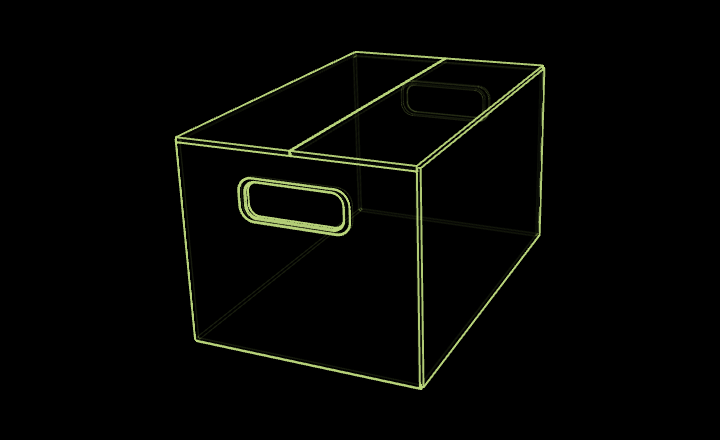
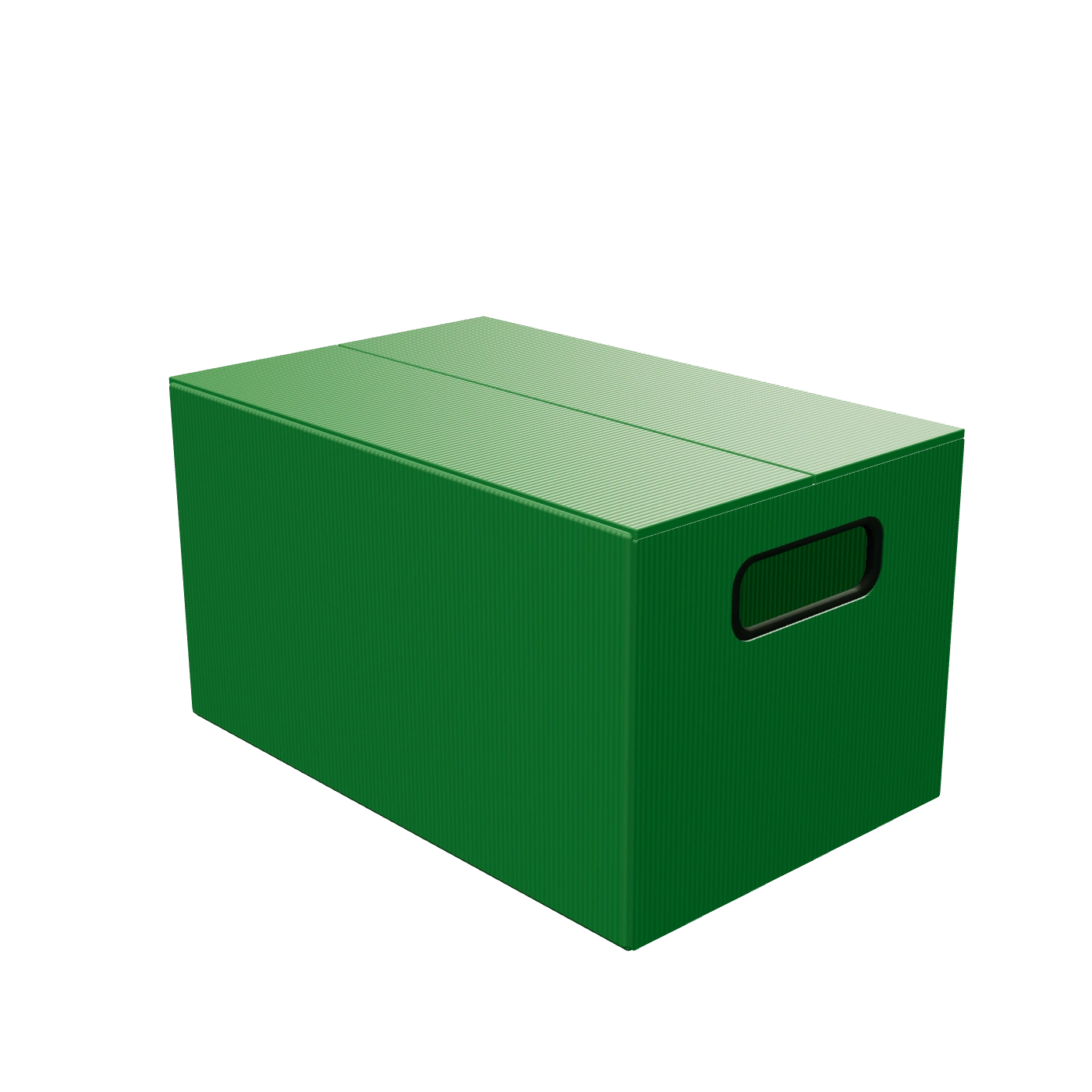
Dimensions: 55 × 35 × 30 cm
Weight: 850 grams
Material: Polypropylene
This is our standard size. If your business needs a different fit, we’ll explore the options with you.
After use, the box folds flat in a few simple steps. The empty boxes stack neatly, taking up less space in the warehouse and on the road.
With fewer bulky empties, you can take the boxes back on existing return trips without planning a separate collection. The more often they circulate, the greater the advantage over single-use packaging.
Each box has its own barcode. Many businesses already scan deliveries as they load and unload. Next Use Pack connects those scans to a platform that records where each box went, when it moved, how often and in which direction.
After a few cycles, you can see how many shipments a particular box has completed, the CO₂ saved over that period and what this means for your costs.
The data for each box and each cycle can feed straight into your sustainability reporting.
The standard size is 55 × 35 × 30 cm, and we can discuss changes on request. There are two ways to customise your box.
Printing: add your company logo so recipients recognise your packaging and every delivery reflects your brand.
Other sizes: if the standard box doesn’t fit your logistics process, we’ll work with you to find out which dimensions are practical within the system.
Use a reusable box to avoid cardboard waste and make shipping more sustainable.
Use fewer raw materials and cut cardboard waste. Reusing your boxes reduces the demand for new materials with each shipment.
Our boxes can be reused over many cycles, giving them a long service life.
The software records every scan during loading and unloading. For each box, the platform tracks completed cycles, location and movements throughout the chain.
You can use the data collected for each box in your sustainability reporting. When the box reaches the end of its life, Next Use Pack provides a report with the emissions data to support your figures.
Next Use Pack collects the box at the end of its life. It is made from a single material, polypropylene, without coatings, adhesive layers or other added materials. It can go straight into recycling without separation, with fewer steps and lower emissions than packaging made from multiple materials.
Next Use Pack handles collection, quality checks and recycling. Your team doesn’t have to add any extra steps.
A cardboard box often becomes waste after one shipment. A Next Use Pack box can make up to 100 trips.
Every box has a unique barcode. Scanning at loading and unloading lets the software record its movements. You can see completed cycles, costs compared with cardboard and CO₂ savings over the box’s lifetime.
We work with your team on site to make your logistics more efficient and sustainable, without extra costs or unnecessary steps for your organisation.
A cycle starts when a box is loaded and dispatched and ends when that same box returns. Its barcode is scanned at loading and unloading.
Each scan records which box is involved, where it leaves or arrives, and when. Two scans record one completed shipment. Tracking every box and shipment shows how many boxes are circulating, how many cycles they have completed and the resulting CO₂ savings.
The barcode is scanned at departure. This records which box is leaving and from which site, marking the start of the cycle.
The box is scanned again on arrival. This closes the shipment record and gives its turnaround time, providing a basis for counting cycles and comparing emissions with cardboard.
Reuse depends on logistics. Data shows how well it works. Each scan adds information that we share with your organisation after each cycle. The service goes beyond the box itself.
Decide when to replace a box or collect it for recycling.
See each cycle’s contribution towards recovering your investment compared with cardboard.
After the box’s service life, its emissions and savings figures can be used in sustainability reports.
Sustainability reporting needs figures for packaging use and emissions. Our figures cover the box’s entire service life. You can see which boxes are in circulation, how many cycles they have completed and how much CO₂ that saves.
Businesses subject to CSRD reporting, and those reporting voluntarily, can use these figures to support their Scope 3 reporting. Next Use Pack supplies the cycle data.
There are no start-up or hidden fees. The price per cycle covers the box, implementation, reporting and data that helps you demonstrate cost savings.
Time with your team on site, prompt replies and regular check-ins during implementation.
See time saved, reduced damage and avoided CO₂ in one place. Loading and unloading scans update the figures in real time.
Sustainability figures are backed by life cycle assessment and ready to use.
Each shipment is scanned at loading and unloading. You can use the data in sustainability reports and to understand the financial impact.
Rent the boxes. There is no purchase price, depreciation or unnecessary stock.
Cycle data shows how many boxes are actually in use.
If a scan is missed, the dashboard shows the last recorded location of the box.
Cycle data links reuse and recyclability to your sustainability reporting.
Use the data to communicate the savings you have achieved.
Alongside the financial benefits, the system improves everyday operations.
Operations
A sturdier reusable box protects your goods. Less damage means lower costs.
Hook-and-loop fasteners replace tape and save time during loading and unloading.
At the end of its life, Next Use Pack takes the box back free of charge.
Evidence and reporting
Reusing the same packaging reduces CO₂ emissions in logistics and supports sustainability requirements.
Our life cycle assessment uses data from actual use.
Every box has a unique barcode. Each scan automatically updates the shipment, location and status.
Savings calculator
See how we support your business from an initial conversation to introducing Packaging as a Service into your existing operation.
Switching to reusable packaging affects your whole operation, from routes and customers to returns. We start small, test how reuse fits your existing supply chain, and expand once it works.
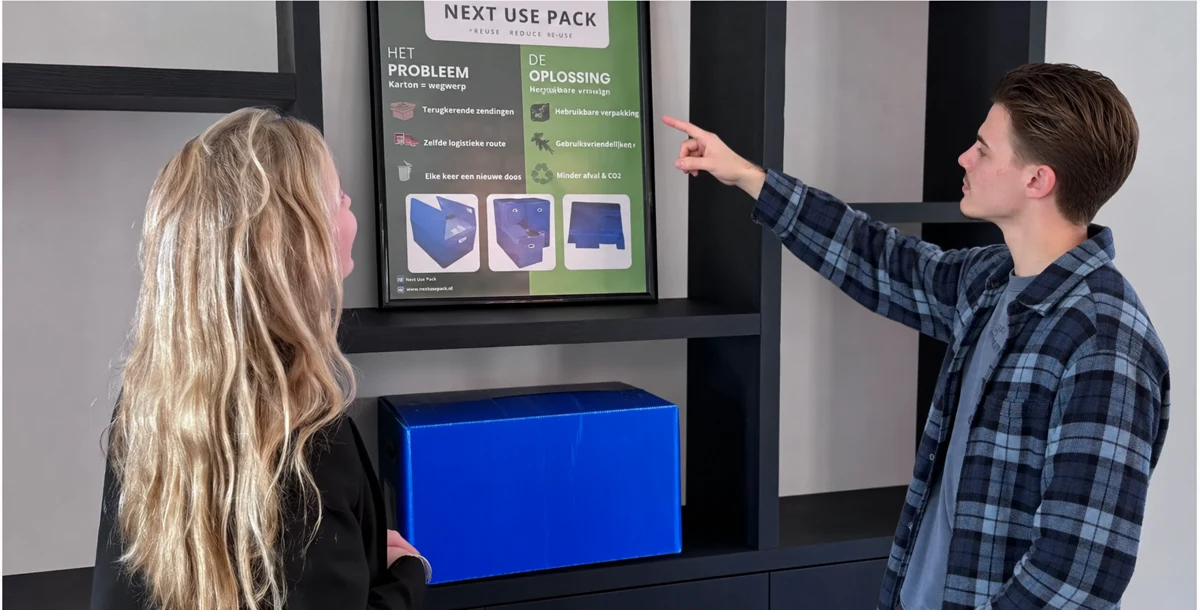
“There’s always time for coffee.” Our first step is to sit down and learn about your business. We ask about the routes you run, the customers you visit and the number of boxes you use. This helps us understand your process and identify where reusable boxes would fit.
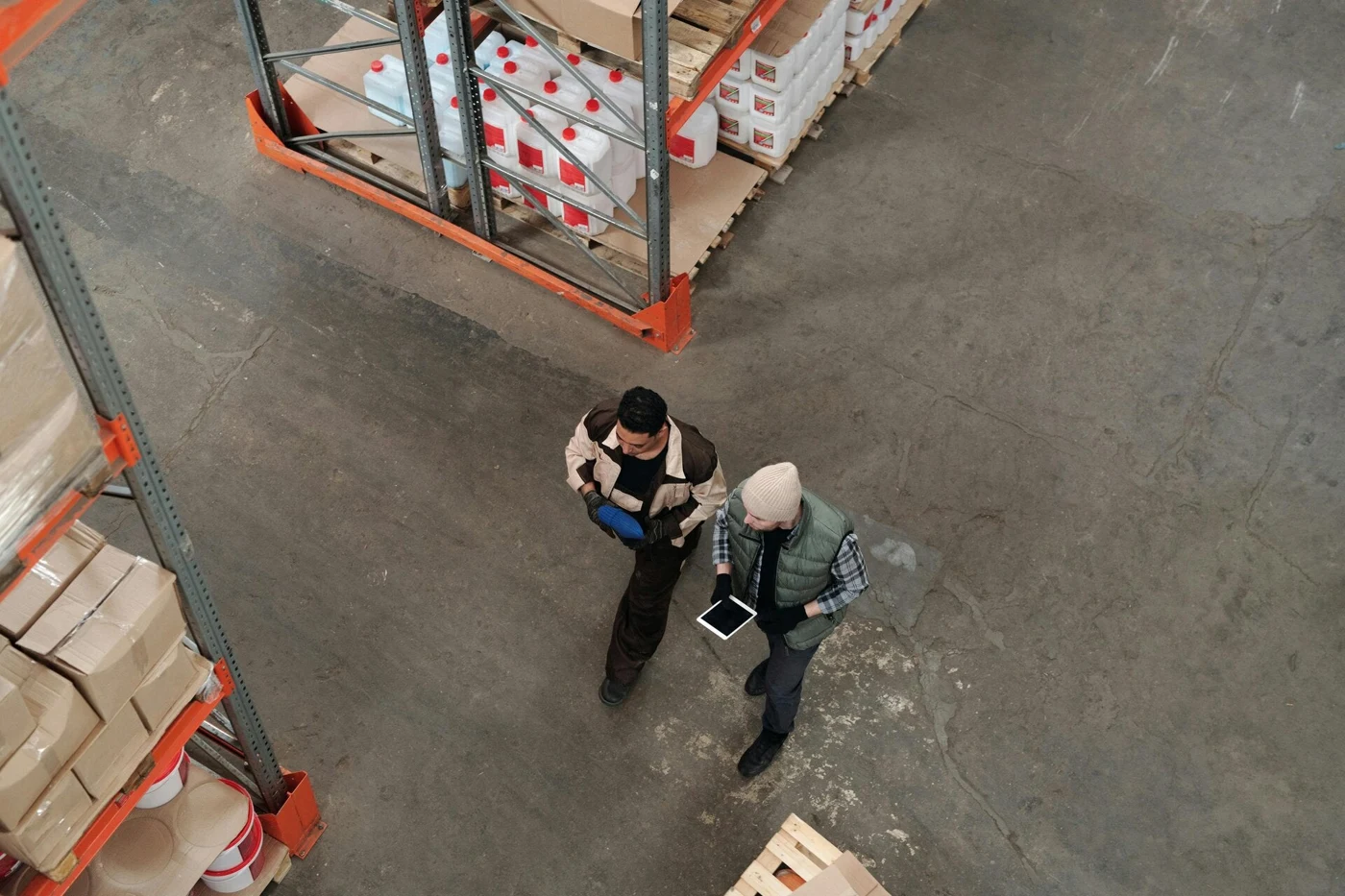
Once we understand the business, we spend a day shadowing your team. We meet the warehouse staff and drivers who handle your packaging every day. They know where time is lost and where a better box could help.
Seeing the operation first-hand helps us avoid ideas that look good on paper but add work in practice. We support the entire switch to sustainable logistics. By the end of the day, we know what the boxes need to do before testing begins.
Before a wider rollout we make a limited number of deliveries using our boxes on the routes we discussed. The pilot lets us establish whether the box fits the process and adds value. Your customer’s risk stays small while we see how the system performs in practice.
We track performance throughout the pilot and adjust anything that needs attention. We then use the results to draw up a practical plan for wider use.
Once the pilot shows that Packaging as a Service works, we expand step by step. Your team has time to adjust and change course where needed. Next Use Pack stays involved and adapts the rollout as new data comes in. We show how many boxes are circulating, how many cycles they complete and how costs and CO₂ emissions compare with your cardboard boxes, so you can see what changes in your operation.